

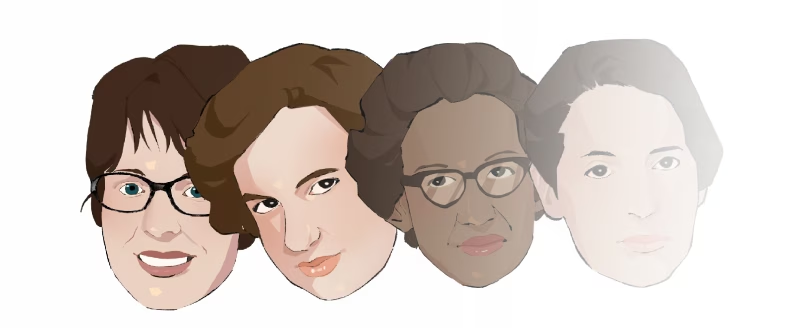
Women of science in literature, between invisibility and recognition
A figure long erased
Literature, particularly until the 19th century, has rarely highlighted women scientists.
Several reasons explain this:
- Limited access for women to scientific studies, especially before the 20th century.
- Social prejudices, which often reduced women to the domestic sphere.
- The image of the scholar associated with the male figure, reinforced by period narratives and biographies.
Thus, we more often find in old novels women passionate about science on the margins or presented as "curiosities" rather than as central actors.

The pioneers represented in literature
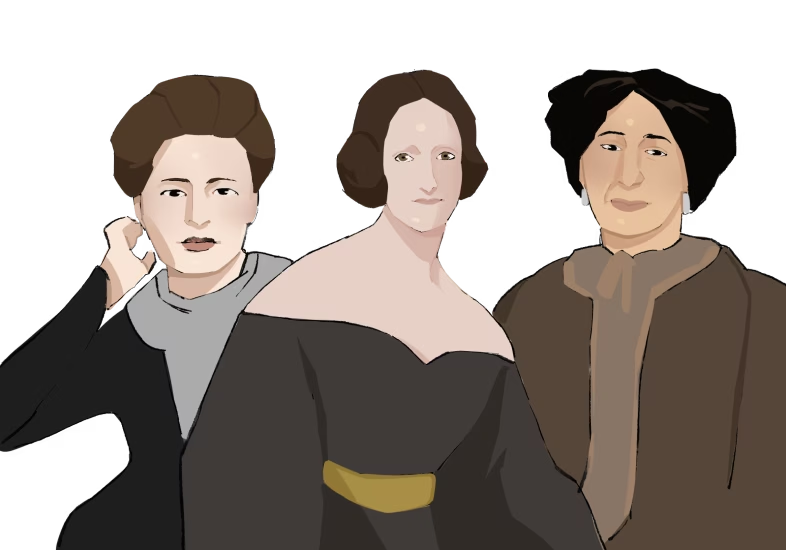
Some female and male authors have nevertheless highlighted figures of women scientists or inspired by science:
- Mary Shelley (1818), with Frankenstein, did not create a scientific heroine, but her novel highlights research and the dangers of science. Between the lines, it also questions the place of women in this field.
- George Sand sometimes featured female characters curious about the natural world, even if science remains secondary in her work.
- Romanticized biographies or narratives then made it possible to give visibility to women like Marie Curie, for example in Madame Curie (1937) by Ève Curie, her own daughter.
Contemporary literature and rehabilitation
Today, literature contributes to restoring their place to women scientists.
Historical or fiction novels feature forgotten figures, such as NASA's "computers" popularized by Hidden Figures (Margot Lee Shetterly, 2016).
Children's literature also values curious and scientific heroines, to inspire new generations.
Science fiction, particularly since Ursula K. Le Guin or Margaret Atwood, introduces female characters who combine scientific intelligence and critical reflection.
A matter of memory and imagination
Women of science in literature are not just characters, they become symbols. Their presence (or absence) reflects the real place of women in scientific research at a given time.
Today, writers contribute to repairing a symbolic injustice, by offering narratives where female researchers, mathematicians, physicists or biologists are central and recognized.